
Shri Saibaba Samadhi Mandir, Shirdi
The Samadhi Mandir of Sai Baba at Shirdi, run by the Shree Saibaba Sansthan Trust. The Sansthan publishes the temple opening at 4:45 AM, the darshan queue running 6:00 AM to 9:30 PM, and four aartis a day, from Kakad Aarti at 5:15 AM to Shej Aarti at 10:00 PM. Entry to the aartis and the faster paid darshan are sold as passes on the Sansthan's own portal, and the photo ID you book with is the one you must show at Shirdi.
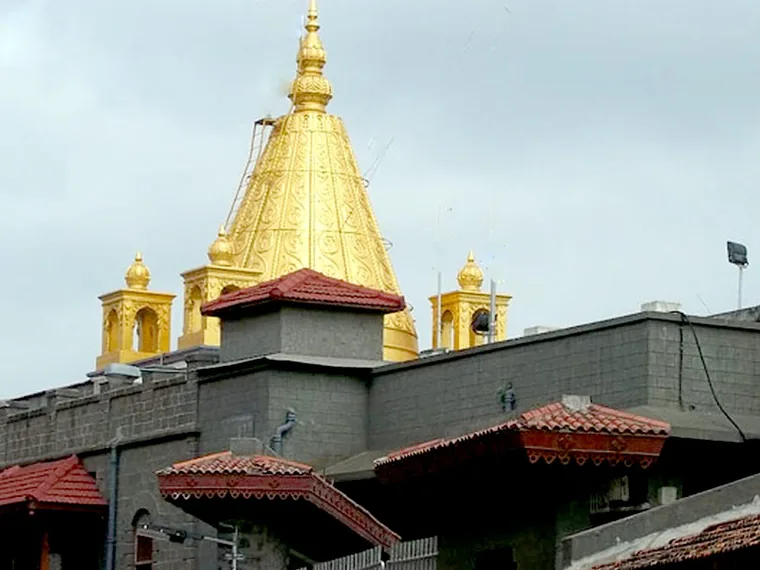
Photo: Nitin3009, CC BY-SA 4.0
Shirdi Sai Baba timings in short
A long darshan day bracketed by aartis. The temple opens before dawn for Kakad Aarti, the general queue runs from 6:00 AM, and Shej Aarti closes the day at 10:00 PM.
History of the Shirdi Sai Baba Temple
Sai Baba first came to Shirdi as a young faqir, by most biographers' reckoning at about sixteen. He is generally said to have stayed three years, disappeared for a year and returned for good around 1858, when the village priest Mahalsapati gave him the name "Sai". His real name and origins are unknown, and he gave no importance to questions about them. He lived for the rest of his life in an old, dilapidated mosque that he called Dwarkamai, where he kept a sacred fire, the dhuni, and gave its ash, udi, to visitors as they left.
The Shirdi Sai Baba temple began as a wada, a traditional mansion, rather than as a shrine. Construction of Buti Wada began in 1914, and the Sansthan records that it was built according to Sai Baba's wishes. When he died on 15 October 1918, a day that coincided with Vijayadashami, his remains were interred in the wada, and it grew into the present Samadhi Mandir.
Worship was kept going from the start by his devotees. An organising committee was formed after his death and a fund, the Sai Samarth Sainath Kothi, was set up on 27 October 1918. On 13 February 1922 the Ahmednagar District Court approved a scheme of management, and the first committee met on 6 April 1922 under the chairmanship of Dasganu Maharaj. The trust later spent years under court receivership and then under the Charity Commissioner of Maharashtra, until the Shree Sai Baba Sansthan Trust, Shirdi Act, 2004 came into force on 23 August 2004.
The temple complex was renovated in 1998-99, adding the darshan lanes, prasadalaya, donation and prasad counters that most visitors pass through today. The Sansthan marked the centenary of the samadhi from 1 October 2017 to 18 October 2018, the same month that Shirdi's airport opened.
- Sai Baba settled
- Around 1858
- Buti Wada begun
- 1914
- Samadhi
- 15 October 1918, on Vijayadashami
- Trust scheme approved
- 13 February 1922
- Average daily visitors
- About 25,000
- Major festivals
- Ram Navami, Guru Purnima, Punyatithi
Why Shirdi Sai Baba matters to devotees
Sai Baba is revered by both Hindus and Muslims, which is much of what makes Shirdi unusual. According to the Shri Sai Satcharita, the account written by G. R. Dabholkar (Hemadpant) shortly after his death, his Hindu devotees believed him to be an incarnation of Dattatreya, while Muslims honoured him as a saint. He often spoke in Islamic terms, gave a Hindu name to the mosque he lived in, and when pressed on his own religion refused to identify with one to the exclusion of the other.
His teaching is usually summed up in two words, shraddha (faith) and saburi (patience), with the instruction to help others and love every living being without discrimination. Devotees still take udi from Shirdi, the ash he was believed to have given healing and protective power, and many visit Dwarkamai, Chavadi and Gurusthan as well as the Samadhi Mandir, because these are the places associated with his life in the village.
Guru Purnima holds a particular place. The Sansthan tells how Tatyasaheb Nulkar once worshipped Baba as his guru on that day, and how Baba then asked another devotee what stopped him from doing the same. Devotees took this as approval, and Guru Purnima became one of the three great festivals of the Sansthan's year. That account is devotional tradition, as published by the Sansthan.
More facts about Shirdi Sai Baba
- Shrine of
- Sai Baba of Shirdi (c. 1838 to 15 October 1918)
- What it is
- The Samadhi Mandir, built from Buti Wada where Sai Baba's remains were placed
- Where
- Shirdi, Rahata taluka, Ahilyanagar (formerly Ahmednagar) district, Maharashtra
- Administered by
- Shree Saibaba Sansthan Trust, Shirdi
- Daily visitors
- About 25,000 on an average day, over 1,00,000 a day in the festival season
- Official websites
- sai.org.in and online.sai.org.in, the only official sites for booking and donations
- Nearest railway station
- Sainagar Shirdi, about 4 km
- Also known as
- Shirdi Sai Baba Temple, Sai Baba Samadhi Mandir, Shirdi Sai Mandir, Shri Saibaba Sansthan Shirdi
Entry rules at Shirdi Sai Baba
What the Sansthan publishes about passes, ID and what to do with your belongings. The ID rule is the one that turns people away.
Photo ID
At verification, every devotee must produce the same original photo ID given at the time of booking. Devotees are not allowed to use the service if the details do not match.
Accepted IDs
Aadhaar card, voter ID, PAN card, passport, ration card or driving licence.
Paid darshan
Booked by date and slot on the portal, up to 4 persons per booking. The portal showed Rs 200 per person for 21 September 2026.
Aarti passes
Booked on the portal for a maximum of 4 persons per booking. The portal showed Kakad Aarti at Rs 600 per person and Madhyan, Dhoop and Shej Aarti at Rs 400 per person for 21 September 2026.
Booking window
Quota for paid darshan, aarti, pooja and accommodation is released 60 days in advance.
Offline passes
VIP darshan and aarti passes can also be obtained in person at the PRO office in Shirdi.
Agents
The Sansthan does not authorise any agents for online booking of darshan, aarti, accommodation, donations, membership or publications.
Baggage
Sansthan lockers are available at a nominal charge.
How to reach Shirdi Sai Baba temple
By air
The Sansthan gives Shirdi Airport as about 17 km from the temple. For longer-haul connections it gives Aurangabad airport as 112 km away and Pune as 201 km.
By train
The new railway station at Sainagar Shirdi is about 4 km from the temple. Kopargaon station is 17 km away and Manmad Junction 61 km.
By road
Shirdi is on the Ahmednagar to Manmad road, NH 160, about 80 km from Ahmednagar and 90 km from Nashik. State and private buses run from Mumbai, Pune, Aurangabad and other cities, and the Sansthan runs a reception centre at the S.T. bus stand.
Best time to visit Shirdi Sai Baba temple
The Sansthan puts average attendance at about 25,000 devotees a day and says that in the festival season more than 1,00,000 come every day. If a calmer darshan matters more than the atmosphere of a festival, avoid the three big ones: Ram Navami (in 2026, 25 to 27 March), Guru Purnima (28 to 30 July in 2026) and the Punyatithi around Vijayadashami, which in 2025 ran from 1 to 4 October.
Within a day, the published programme shapes the choice. The darshan queue runs from 6:00 AM to 9:30 PM, and darshan inside the Samadhi Mandir starts at 6:25 AM after Mangal Snaan and the Shirdi Majhe Pandharpur aarti. If you want to attend an aarti rather than join the queue, book the pass on the Sansthan's portal, which releases quota 60 days ahead. On eclipse days the Sansthan can close the temple for some hours, as it did on 3 March 2026, so check its notices for your date.
Tips before you go
- Carry the original photo ID you booked with; the Sansthan refuses service if the details do not match.
- Book aarti and paid darshan passes only on sai.org.in, online.sai.org.in or at the PRO office, since the Sansthan authorises no agents.
- Quota opens 60 days ahead, and dates shown as full can open up later through cancellations.
- Leave bags and valuables in the Sansthan's lockers, available at a nominal charge.
- Plan meals around the Prasadalaya, which serves from 10:00 AM to 10:00 PM.
- For lost belongings or a missing companion, go to the announcement centre near Gate 3.
More than one shrine, and more than one queue
A visit to Shirdi usually means the Samadhi Mandir and several other places inside the Sansthan's complex, each with rituals on the same daily programme.
Inside the complex
The Sansthan lists the Samadhi temple, Gurusthan, Dwarkamai, the Maruti temple, Chavadi, three temples to Ganesha, Shanishwar and Mahadev, Nanda Deep and the Gurudev Datta Mandir as the temples to visit. Dhuni Pooja with rice and ghee is performed in Dwarkamai at 11:30 AM every day.
After Sai Baba's death in 1918 his remains were placed in Buti Wada, which grew into the present Samadhi Mandir. The Sansthan says the premises were renovated in 1998-99 and include a darshan lane, prasadalaya, donation and prasad counters and a book stall.
Help on the day
First aid is available near Gurusthan, in the darshan queue and on the ground floor of Sai Niwas. For lost property or a missing person, the Sansthan directs devotees to the announcement centre near Gate 3 or its security department.
A reception centre operates at the S.T. bus stand. The Sansthan gives Sainagar Shirdi railway station as 4 km away, Kopargaon 17 km and Manmad Junction 61 km, and the new Shirdi airport as 17 km away.
Not verified yet 6 items no official source publishes
- A dress code. The Sansthan does not publish one on the pages read here, so nothing is stated as a rule.
- Whether mobile phones may be carried into the Samadhi Mandir. The Sansthan's pages read here do not say.
- Free darshan passes. The portal offers them, but their conditions were not visible without logging in.
- The slot times for paid darshan, which the portal only shows during booking.
- Whether aarti and darshan pass prices differ on festival days such as Guru Purnima, Ram Navami or Punyatithi.
- Wheelchair access and any separate queue for elderly or disabled devotees.
Know one of these from an official notice? Send it to us and the page is updated with a new date.
Questions about visiting
Answered from what the temple publishes, with the gaps left as gaps.
What are the Shirdi Sai Baba temple timings?
The Sansthan publishes the temple opening at 4:45 AM and the general darshan queue from 6:00 AM to 9:30 PM. The day ends with Shej Aarti at 10:00 PM.
What are the aarti timings at Shirdi?
Four aartis a day: Kakad Aarti at 5:15 AM, Madhyan Aarti at 12:00 noon, Dhoop Aarti at sunset and Shej Aarti at 10:00 PM. On the booking portal for 21 September 2026 the Dhoop Aarti slot was 6:30 PM to 7:00 PM.
How much is an aarti pass?
On the Sansthan's own portal for 21 September 2026, Kakad Aarti cost Rs 600 per person and Madhyan, Dhoop and Shej Aarti Rs 400 per person. Up to 4 persons can be booked at a time.
How much is paid darshan?
The Sansthan's portal charged Rs 200 per person for paid darshan on 21 September 2026, booked by date and slot, up to 4 persons per booking.
Where do I book darshan and aarti passes?
On online.sai.org.in, the Sansthan's app, or in person at the PRO office in Shirdi. The Sansthan names sai.org.in and online.sai.org.in as its only official sites and authorises no agents.
How far ahead can I book?
The Sansthan releases quota for paid darshan, aarti, pooja and accommodation 60 days in advance. Dates shown as unavailable may open up later through cancellations.
What ID do I need?
The same original photo ID you entered when booking, for every devotee on the booking. The Sansthan lists Aadhaar, voter ID, PAN, passport, ration card and driving licence, and turns away mismatches.
Is there a dress code at Shirdi?
Not one this site has verified. The Sansthan does not publish a dress code on the pages read here, so none is reported as a rule. Modest dress is the safe choice.
Where can I keep my bags?
The Sansthan says its lockers are available at a nominal charge. Whether phones are allowed inside the Samadhi Mandir has not been verified here.
When is the Prasadalaya open?
The Sansthan gives Prasadalaya hours as 10:00 AM to 10:00 PM.
How many people visit Shirdi?
The Sansthan puts average daily visitors at about 25,000, rising above 1,00,000 a day in the festival season.
Can I rely on these timings on the day?
They are the Sansthan's standing daily programme, which makes them a good guide. Festivals and eclipses change the day, and Dhoop Aarti follows sunset, so check the portal for your date.
Need the timings in full?
The timings page carries the whole published schedule, block by block, and what to check before you travel.